Playlist growth can feel random when you’re only looking at stream spikes and monthly listeners. One day, you land playlist placements, and everything jumps. The next week, it fades, and you have no idea which promotional efforts actually worked or which playlists sent low-intent traffic.
That’s why serious music promotion in 2026 is built around tracking. Not just “more Spotify streams,” but actionable insights—where listeners came from, what they did after they listened, and whether your audience growth is real enough to support the next release.
Independent artists and major labels use different budgets, but the tracking system is the same. You need a complete picture across streaming platforms, social media platforms, and landing pages so you can connect playlist pitching, ad campaigns, and content to the metrics that matter.
This guide breaks down the top music promotion tools for playlist growth tracking and explains how to use them as a coherent stack. You’ll learn which tools capture streaming data, which ones show playlist placements, which ones measure conversion tracking, and how to tie everything together into one view of performance.
Monthly listeners can rise for the wrong reasons. A random playlist push can inflate streaming data without producing real fans, email sign-ups, or repeat listening behavior. When that happens, the numbers look exciting, but your music career doesn’t move forward.
Tracking helps you identify the difference between volume and value. If a playlist sends streams but no saves, has a weak click-through rate to your artist profile, and no audience insights that match your target, you treat it as low-quality traffic rather than a win.
It also protects your catalog. Tools that surface geographic data and streaming source patterns help you spot suspicious behavior early, which matters when fake streams or botted “daily playlists” hide inside low-quality playlist networks.
Before tools, you need clarity. Playlist growth tracking only works when you know what “good” looks like for your stage and genre. Otherwise, you’ll drown in charts and still feel unsure.
Start by tracking key metrics that reflect the real fan journey. That includes saves, playlist adds, follows, and repeat listening behavior on streaming platforms, plus click-through rate from smart links and landing pages when you promote music externally.
Then layer in attribution. You want to know whether playlist placements came from playlist curators, user-generated content momentum, paid advertising, or social media posts—because the strategy decisions depend on the source, not just the outcome.
Spotify for Artists should be your first analytics layer because it’s the closest view into Spotify playlists' behavior and audience data. It shows performance data, streaming source categories, and how your track is moving through Spotify’s ecosystem.
When you’re tracking playlist placements, the most important habit is consistency. Check your sources daily during release windows so you can spot movement early and understand whether growth is compounding or collapsing.
Spotify for Artists also becomes a safety tool. If you see unexplained spikes from odd geographic data or streams that don’t match your promotional efforts, you can treat it as a red flag rather than celebrating blindly.
Playlist placements are only valuable if they create behavior. When you see a playlist driving plays, compare that to saves and profile actions, because real listeners tend to explore.
This is where many independent artists get misled by big playlists. A placement can look impressive but produce weak audience growth if the playlist is passive, low-intent, or mismatched to your genre.
Your goal is to build a “keeper list” of playlists that consistently deliver engaged listeners. Tracking turns playlist pitching from guesswork into a repeatable business model for growth.

Apple Music is often treated as secondary, but cross-platform tracking increases credibility and improves how you spend time. If your social media ads are driving attention, you want to see whether listeners choose Spotify, Apple Music, or other platforms.
Apple Music for Artists provides audience insights and streaming data that help you measure whether your music service's presence is expanding. This is especially useful if your genre performs well in regions where Apple Music has strong adoption.
When you combine Apple Music tracking with your Spotify view, you get a more advanced understanding of audience demographics and where your promotional efforts are actually landing.
YouTube Studio is essential because playlist growth is often triggered by visuals. Music videos, lyric videos, and short-form clips can become the discovery entry point that later turns into playlist placements.
YouTube Studio provides performance data like retention, traffic sources, and audience insights. Those insights help you understand whether your visual storytelling is attracting the right listeners or generating casual views that never convert.
It’s also where you measure the bridge between content creation and streaming platforms. When your YouTube content pushes music directly to smart links, you can evaluate click-through rate and conversion tracking instead of guessing.
Short-form content can create a surge in streaming, but only if it’s strategically linked. If a short goes semi-viral and you don’t capture the fan journey, you’ll see a stream spike without long-term audience growth.
YouTube Studio helps you identify which clips generate meaningful follow-through. That makes it easier to double down on formats that produce real listeners, not just views.
When you pair YouTube performance with smart links, you can build detailed attribution that connects content to streams, saves, and playlist adds.
Smart links are one of the most underrated music promotion tools because they create one controlled door into multiple platforms. Without them, you’re sending people to random destinations and losing the ability to measure what worked.
A strong, smart link tool supports custom domains, multiple platforms, and conversion tracking. It helps you see whether listeners choose Spotify, Apple Music, YouTube Music, or other services, and how that choice shifts across campaigns.
This matters for tight budget campaigns. When you know which platform your audience prefers, you optimize your targeting, messaging, and landing page flow to increase results without increasing spend.
A landing page creates a measurable funnel. Instead of hoping that social media posts translate into plays, you track click-through rate, session behavior, and drop-off points.
Landing pages also support email sign-ups and fan capture, which is critical if you want to build direct fans and reduce dependence on algorithms. Playlist growth is powerful, but fan ownership is what creates stability.
When you connect landing pages to Google Analytics, you begin seeing a complete picture of the listener journey from social to stream.
Google Analytics is not just for websites. It’s a music marketing tool when you use it to track traffic from social media platforms, search engines, and paid campaigns into a controlled landing page.
With proper setup, Google Analytics shows which channels drive engaged actions—clicks to streaming platforms, time on page, and conversions like email sign-ups. That helps you measure promotional efforts beyond vanity.
It also creates discipline. When you can see performance data by source, you stop wasting time on platforms that look busy but produce little audience growth.
UTMs are simple but powerful. When you tag your Instagram Stories, social media ads, and release posts, you can see exactly which content drives action.
This is how you connect creative to outcomes. Instead of debating what “felt good,” you measure what moved listeners from attention to listening.
Over time, UTMs become a knowledge base. You learn what hooks, visual styles, and messages produce real conversions for your genre.
Once you’re beyond basic dashboards, music analytics tools help you track playlist placements, streaming data trends, and audience demographics across many releases. These tools are especially useful when you’re running targeted campaigns and want deep insights.
Advanced analytics platforms can show playlist adds over time, historical playlist movement, and how your track compares to similar artists. That gives you a more strategic view than single-platform dashboards alone.
For independent artists, the key is choosing tools that match your stage. If you’re early, you need clarity and actionable insights, not complex reports that distract from execution.

Look for tools that offer real-time data, geographic data, and playlist tracking with enough detail to identify patterns. If a platform only shows surface-level charts, it won’t help you make decisions.
You also want the ability to compare different platforms, because playlist growth often moves differently across Spotify, Apple Music, and YouTube Music, depending on audience habits.
Most importantly, you want tools that help you spot risk. If your streams rise without engagement, you need visibility fast, not after the damage is done.
Playlist pitching is still a major lever, but the “spray and pray” approach wastes time. The best playlist pitching tools help you research playlist curators, verify curation quality, and keep contact workflows organized.
The goal is not to pitch everyone. It’s to pitch the right curators who match your genre, who update regularly, and who influence real listening habits.
Tracking matters here because it tells you which curators produce real fans. When you connect curator outreach to performance data, you stop repeating low-value placements.
Playlist push services often hide behind vague promises. If a service can’t explain where traffic comes from, how playlists are vetted, or how results are measured, you’re exposed.
Tracking gives you protection. When you monitor playlist placements and listener behavior, you can identify when growth is real and when it’s artificial.
That’s why playlist promotion should be built around transparency. If the data can’t be explained, the result is not stable.
Paid advertising can support playlist growth when used correctly. The mistake is using paid advertising to chase “how many streams” instead of using it to attract the right audience that engages deeply.
Ad platforms provide audience insights, demographic targeting, and performance data that help you refine creative. When you pair this with smart links and analytics tools, you can build a reliable acquisition loop.
If you’re working with a tight budget, you don’t need complexity. You need a simple system that measures click-through rate, platform choice, and post-click behavior.
The fan journey is where growth becomes sustainable. A click is not a win if it doesn’t turn into listening behavior and future engagement.
When you track the journey, you can see whether your ads are reaching potential fans or producing empty traffic. Empty traffic hurts retention and can weaken long-term distribution.
This is where playlist growth and paid campaigns intersect. Ads can create the first touch, and playlists can create ongoing discovery, but only if both are tracked.
Radio stations and radio airplay tracking tools can still matter in certain genres and regions. Even if radio is not your main strategy, external signals can boost credibility with industry professionals and record labels.
Tracking radio airplay also helps you understand geographic interest. If a region is responding, you can align your playlist pitching and content strategy to amplify that local momentum.
For most indie artists, radio is a secondary layer. But in a complete picture system, it becomes a useful context rather than noise.
Creative decisions impact tracking outcomes. If your cover art and visual identity don’t match the sound, you can drive clicks but lose retention.
That’s why testing creative variants matters. When you run targeted campaigns, you can see which visuals produce a higher click-through rate and better conversion tracking.
This isn’t “design obsession.” Its performance. In playlist ecosystems, perception influences whether listeners stay long enough to send positive signals.
The goal is not to collect tools. The goal is to build a system where each tool answers a specific question.
Spotify for Artists answers how the track performs inside Spotify playlists and algorithmic playlists. Smart links answer where listeners go and what they click. Google Analytics answers what happens before the stream and whether your marketing campaigns convert.
Advanced analytics tools add deep insights when you need scale. YouTube Studio explains how your visuals drive discovery. Apple Music tracking gives you cross-platform audience growth.
When these tools work together, you stop guessing. You make data-driven decisions and build repeatable promotions.
Explicit Promo treats playlist promotion as a measurable system. That means focusing on playlist placements that create real listeners, not inflated streaming numbers that disappear.
Tracking is part of safety. When we monitor streaming data, playlist movement, and engagement signals, we can identify what’s working and cut what isn’t before it damages momentum.
This is how independent artists build sustainable growth. You don’t need a massive team or major labels to track like a professional—you need the right tools and the discipline to read them correctly.
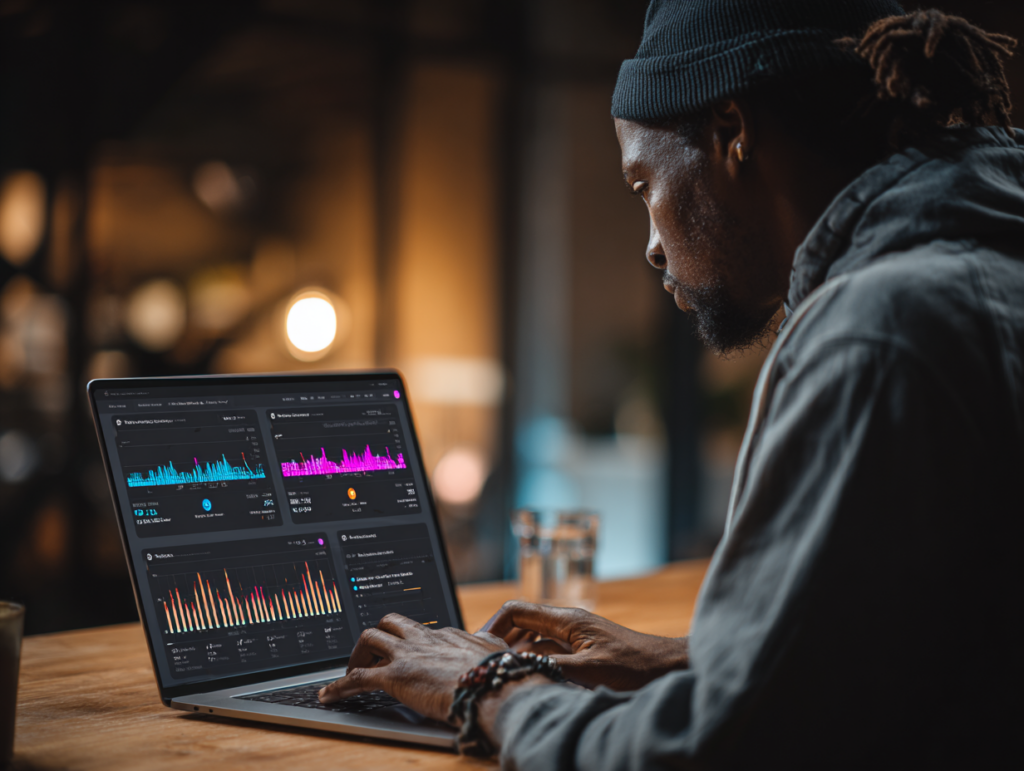
Spotify for Artists is the foundation, but advanced music analytics tools can add deeper playlist tracking and historical movement so you can identify patterns and high-value playlists.
Use smart links and Google Analytics with UTMs. That gives you conversion tracking and shows which social media posts produce clicks that turn into real listening behavior.
Yes. Smart links create measurable attribution across multiple platforms and help you understand which streaming services your audience prefers without spending more money.
Watch for streams without saves, weak follower growth, abnormal geographic data, and sudden spikes that don’t match your promotional efforts. Those patterns often signal low intent or risk.
Not at first. Many independent artists can build strong systems using Spotify for Artists, YouTube Studio, smart links, and Google Analytics, then add advanced tools when scale demands deeper insights.
The top music promotion tools for playlist growth tracking are valuable because they replace guesswork with clarity. They help you understand where listeners come from, which playlist curators deliver real fans, and which promotional efforts create lasting audience growth.
When you combine streaming dashboards, smart links, analytics, and advanced features like real-time data and detailed attribution, you get a complete picture of your release performance. That picture is what allows you to build momentum release after release, instead of starting over every time.
Ready to grow your streams the right way? Contact Explicit Promo today.
