Data is no longer optional for independent artists. If you are releasing music without tracking what your numbers are telling you, you are guessing at every decision. In 2026, competition on Spotify is too strong for artists to rely only on instinct, playlist hopes, or surface-level stream counts.
The best Spotify analytics tools for independent artists now go far beyond basic reporting. These platforms can help you understand audience demographics, playlist placement history, listener behavior, save rates, algorithmic playlist activity, and real-time campaign performance. The question is not whether you should use analytics. The real question is which tools belong in your release strategy and how each one helps you make better promotion decisions.
This guide breaks down the most useful Spotify analytics tools, what each platform does well, where each one has limits, and how independent artists can use analytics alongside real promotion. Data only becomes valuable when it helps you act with more clarity.
Many artists separate analytics and promotion. They check numbers in one place, run campaigns somewhere else, and then try to guess whether the promotion actually worked. That creates a major blind spot.
Your music analytics tools should function as the feedback layer for every promotional decision you make. If a campaign increases streams, you need to know which playlists created the lift, which cities responded, whether listeners saved the track, and whether monthly listeners stayed after the campaign ended.
Without that visibility, artists can spend money on promotion without understanding what created the result. A spike in streams may look exciting, but if those listeners do not save the track, follow the artist profile, or keep listening after the campaign, the growth may not last.
This is why campaign-aware analytics matter. Artists should read their Spotify data through the lens of active promotion. When analytics and promotion work together, every release becomes a learning cycle. You see what moved, why it moved, and what to improve next time.
For artists building a long-term release plan, analytics should sit alongside Spotify playlist strategy, playlist outreach, pre-save campaigns, short-form content, and release timing. That combination creates smarter growth than promotion or reporting alone.

Every independent artist should start with Spotify for Artists. It is free, direct from Spotify, and gives you access to data that no third-party platform can fully replace.
Spotify for Artists shows stream counts, listener demographics, top-performing songs, playlist sources, audience locations, and discovery paths. The “source of streams” section is especially useful because it shows whether listeners came from editorial playlists, algorithmic playlists, listener playlists, your profile, or direct search.
This matters for promotion because listener playlists and algorithmic sources can reveal where momentum is coming from. If a track starts gaining from Release Radar, Discover Weekly, or listener playlists after a campaign, that may show that Spotify is receiving positive engagement signals.
Spotify for Artists also helps artists understand core metrics like saves-to-streams ratio, listeners, streams per listener, playlist adds, and follower growth. These numbers are essential when evaluating whether a song is creating real listener interest. You can learn more about key Spotify data points through Spotify for Artists metrics explained.
The limitation is that Spotify for Artists does not show everything. It has limited historical comparisons in many views, does not always identify specific playlist performance in detail, and does not connect promotion spend directly to streaming results. It should be your foundation, not your only tool.
Chartmetric is one of the strongest platforms for artists who want deeper streaming intelligence. It is widely used by labels, managers, agencies, and serious independent artists because it brings together data from Spotify, Apple Music, YouTube, TikTok, Instagram, radio, and other platforms.
For Spotify growth, Chartmetric is especially useful for playlist tracking. Artists can monitor playlist adds, removals, playlist follower counts, chart movement, audience geography, and long-term streaming patterns. This makes it easier to understand whether a track is gaining real traction or is only seeing short-term activity.
Chartmetric can also help artists compare themselves to similar artists in their genre. Its artist rankings, popularity indicators, and historical charts give context around whether a release is growing faster or slower than comparable acts.
For artists trying to understand how to get more Spotify followers, Chartmetric can help identify moments when follower spikes happened and what may have caused them. A playlist add, TikTok post, campaign push, or press feature may all create visible changes in the data.
Chartmetric offers a free tier with limited access and paid plans for deeper tracking. Independent artists can start with the free version, then upgrade when they are releasing consistently, pitching playlists, or running paid promotions.
Soundcharts is useful for artists who need faster updates during active release campaigns. Where Chartmetric is strong for historical analysis, Soundcharts is often helpful for real-time movement.
The platform tracks playlist adds, streaming activity, radio airplay, chart movement, and cross-platform signals. Its alert system can notify artists when a track enters a playlist, reaches a milestone, or moves into the charts. This makes it helpful during the first few weeks after release, when early data can influence the next promotional step.
Soundcharts can also support artists running multi-channel campaigns. If you are promoting through Spotify playlists, TikTok, radio, or social media at the same time, real-time monitoring can help you see whether momentum is spreading across platforms.
For artists using a TikTok music promotion strategy alongside Spotify campaigns, this kind of cross-platform view can be valuable. A song may start gaining attention on social media before the streaming lift becomes obvious.
Soundcharts may not replace deeper long-term analysis, but they can be very useful when a release is active and you want quicker feedback. Artists who release often may benefit from using Soundcharts during launch windows and Chartmetric for long-term tracking.
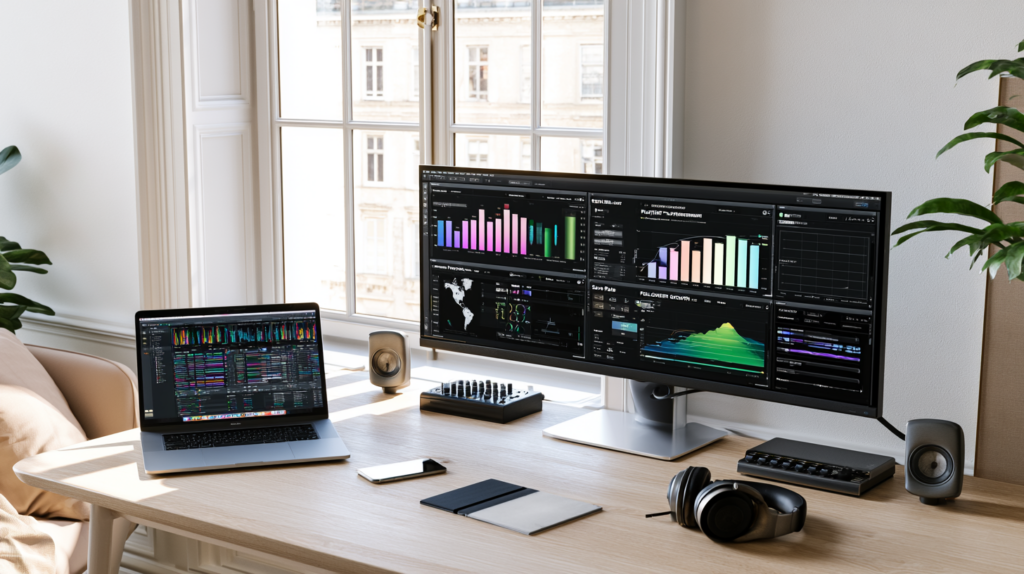
Third-party analytics tools show what happened. The Explicit Promotions Artist Dashboard helps artists understand what happened during a campaign and how promotion activity connects to streaming movement.
When artists run a campaign with Explicit Promotions, the dashboard gives visibility into campaign performance, curator activity, playlist movement, and streaming changes. This helps artists understand how their promotion is being built instead of only seeing a final stream count after the campaign ends.
That distinction matters. Many artists want to know whether their promotion is reaching real listeners, whether playlist placements are active, and whether their campaign is creating measurable growth. The dashboard helps connect those dots.
For independent artists, the value is not just reporting. It is campaign transparency. You can review how the promotion is unfolding, where the track is being placed, and how streaming momentum develops over time.
Explicit Promotions has helped generate 50M+ streams delivered through its curator network and works with 500+ curators in the top 1% globally. For artists who want campaign data that connects directly to promotional activity, the Artist Dashboard becomes an important part of the analytics stack.
If your goal is to understand the relationship between promotion spend and streaming outcomes, campaign-level reporting can be more useful than passive analytics alone. You can explore campaign options through Spotify playlist promotion services.
Independent artists do not need every analytics tool. They need the right combination for their current stage.
If you are just starting, begin with Spotify for Artists and a free Chartmetric account. That gives you direct Spotify data and basic playlist visibility without adding unnecessary cost. At this stage, the goal is to learn how your audience responds to each release.
If you are actively releasing and promoting, add a stronger playlist monitoring tool or campaign dashboard. Spotify for Artists can show your baseline, Chartmetric can show long-term growth, and Soundcharts can help with real-time movement. If you are running campaigns with Explicit Promotions, the Artist Dashboard becomes your campaign-specific reporting layer.
If you are managing multiple releases, building a catalog, or acting as your own manager, you may need a more advanced stack. That may include Chartmetric Pro, Soundcharts, Spotify for Artists, a campaign dashboard, and a spreadsheet or project management system that tracks release dates, playlist adds, saves, followers, campaign spend, and post-release growth.
A practical analytics stack should help you answer clear questions. Which songs retain listeners? Which playlists drive real engagement? Which cities respond best? Which campaigns create lasting growth? Which tracks should receive more promotion?
When the tools help answer those questions, analytics becomes part of your growth system rather than another dashboard to check.
Streams are the metric most artists watch first, but the saves-to-streams ratio may be more important for long-term growth. A track with 10,000 streams and strong saves is sending a better signal than a track with more streams but low engagement.
Surveys show that listeners want to return to the song. They are a strong sign of genuine interest, and they may help support Spotify’s algorithmic recommendations. A high save rate can influence whether a track gains more activity through Discover Weekly, Release Radar, and other algorithmic surfaces.
Artists should also watch streams per listener, playlist adds, followers gained, skip behavior, and listener retention after a campaign. If streams rise during promotion but collapse immediately afterward, the campaign may not be producing lasting engagement. If saves, followers, and repeat listening grow alongside streams, that is a healthier signal.
This is where the Spotify pre-save campaign strategy can support a release. Pre-saves help create early engagement before the song drops, while playlist promotion and post-release analytics help measure how the track performs once listeners hear it.
The goal is not just to create a spike. The goal is to build signals that support ongoing discovery.
Analytics can show where your music is moving, but analytics alone does not create movement. Data informs the strategy. Promotion executes it.
A dashboard may show that your track performs well in certain cities, but you still need a plan to reach more listeners there. Chartmetric may show that similar artists are gaining through certain playlists, but you still need playlist outreach. Spotify for Artists may show strong saves, but you still need consistent release activity to build on that signal.
The artists who grow sustainably are not just better at reading numbers. They are better at acting on them. They use Spotify analytics to understand what is working, then use promotion to amplify the signals that matter.
This is why organic playlist promotion, curator relationships, short-form content, pre-save campaigns, and release planning still matter. Analytics helps artists avoid wasting effort, but it cannot replace the work of reaching real listeners.
Unlike services that only advertise large reach numbers, Explicit Promotions focuses on campaigns built around real streams, real fans, and measurable growth. With 20M+ genuine fans reached, campaign reporting gives artists a clearer view of how promotion supports their release.

The best tool depends on what you need to measure. If you want direct Spotify data, use Spotify for Artists. If you want broader industry intelligence and playlist tracking, use Chartmetric. If you need real-time campaign alerts, consider Soundcharts. If you are running a campaign with Explicit Promotions, use the Artist Dashboard to understand campaign-specific results.
The mistake is expecting one tool to answer every question. Spotify for Artists tells you what Spotify sees. Chartmetric shows a broader context. Soundcharts help with real-time tracking. A campaign dashboard connects promotion activity to campaign performance.
Independent artists should choose tools based on release frequency, budget, campaign activity, and growth goals. An artist releasing one single per year does not need the same stack as an artist releasing monthly and running playlist campaigns.
The most important step is to make analytics part of your release process. Check your baseline before the campaign, track movement during promotion, and review results after the campaign ends. That process helps each release become smarter than the last.
For artists building a long-term music promotion strategy, analytics should guide decisions about playlist outreach, campaign timing, target markets, and follow-up promotion.
Spotify for Artists is the best free starting point because it gives direct access to Spotify data, including streams, listeners, demographics, playlist sources, saves, and follower growth.
Not always. New artists can start with Spotify for Artists and free Chartmetric access. Paid tools become more useful when you are releasing often, running campaigns, tracking playlists, or managing multiple songs.
Saves-to-streams ratio is one of the most important metrics because it shows whether listeners want to return to your song. Strong saves can support algorithmic playlist activity and long-term growth.
The best Spotify analytics tools can show where your music is gaining traction, which listeners are responding, and which campaigns are helping you grow. But data alone is not the growth engine. Promotion turns insight into momentum.
If you are ready to run a campaign backed by 500+ top curators, minimum guaranteed stream targets, and Artist Dashboard tracking, Explicit Promotions can help you build a smarter Spotify growth strategy.
Visit Explicit Promotions' Spotify campaigns to review your options and start building real movement around your next release.
Real streams. Real fans. Real growth.
