AI in music promotion is no longer a futuristic idea—it’s a daily advantage for independent artists who want to compete in a crowded music industry without burning their marketing budget. The reality is that music marketing now demands speed, consistency, and precision across multiple formats, from short videos to playlists to ads. Most indie artists can’t do all of that alone, and that’s exactly where AI tools become powerful tools.
But AI is not a shortcut that replaces talent. It’s a system that helps you execute better. When used correctly, artificial intelligence supports your artist identity, improves promotional content output, and helps you understand listener behavior across music streaming platforms like Spotify and Apple Music. When used poorly, it creates generic content, weak engagement, and a brand that sounds like noise.
This guide breaks down how AI powered workflows can enhance music promotion, what tools are actually useful, which key metrics matter, and how to stay ahead without sacrificing your style. If you want cost-effective growth that still feels human, you need a strategy where AI supports creativity instead of replacing it.
Music promotion has shifted into an always-on environment. Social apps reward constant content creation, streaming platforms reward consistent releases, and audiences discover music through endless scrolling. That creates pressure, especially for indie artists who are also writing, recording, and handling their own business.
AI tools help by reducing friction. Instead of spending hours drafting captions, planning release calendars, or pulling performance data, you can use AI to speed up decisions and generate structure. The value is not that AI “creates your career.” The value is that it helps you execute marketing work at the pace the platform world demands.
In practice, AI helps you compete with bigger teams. Major labels have analysts, editors, and media buyers. Independent artists can now access a lighter version of that capability through machine learning systems that process vast amounts of data and turn it into actionable direction.
The biggest mistake artists make is using AI to sound like everyone else. AI can generate content quickly, but if you don’t guide it with your voice and style, the output becomes generic. That weakens your artist identity, which is the most important long-term asset in music marketing.
AI works best when your identity is clear. If you know your genre, your themes, and your audience, AI becomes an amplifier. It helps you produce more promotional content while maintaining the same artistic identity across multiple formats. If you don’t know your identity, AI will fill the gap with average language and trend clichés.
Think of AI as a production assistant, not the creative director. You are still the brand. AI is the tool that helps you show up consistently.
AI becomes useful when it helps you do three things: create, analyze, and optimize. It supports content workflows, helps you interpret performance data, and improves targeting decisions when you run Spotify paid or social ads.
The goal is not to automate everything. The goal is to reduce the workload that doesn’t require your emotional creativity. AI can help you brainstorm ideas, write first drafts, and structure campaigns. You refine and approve what matches your sound and your audience.
When this is done correctly, AI is cost-effective because it saves time, improves output, and increases consistency. Consistency drives growth because platforms reward creators who maintain momentum.
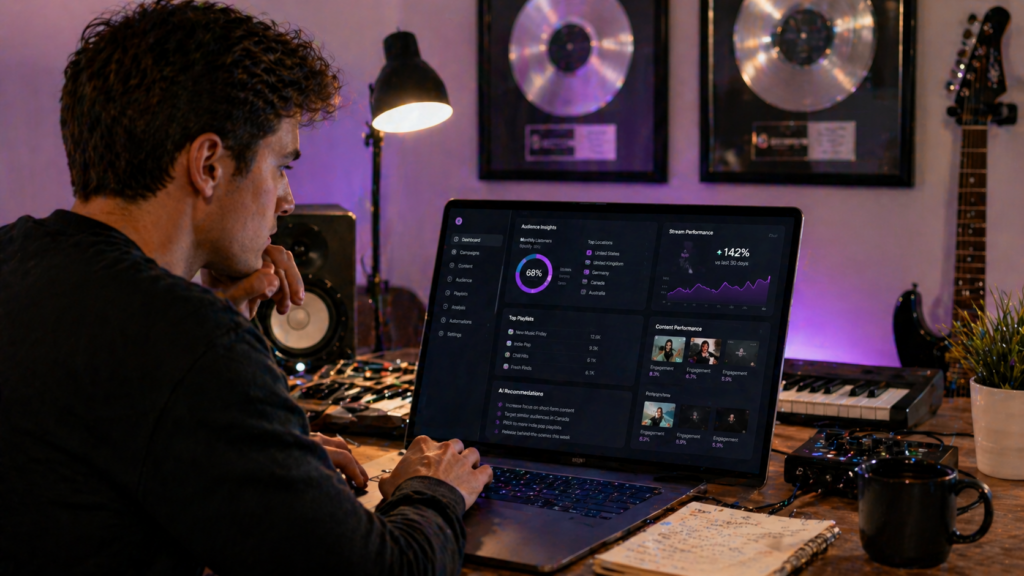
Promotional content is where most artists feel overwhelmed. You need short videos, captions, hooks, story posts, and sometimes long-form content for YouTube or music videos. AI helps you create a content plan that turns one song into many assets.
For example, AI can generate multiple hook angles for the same track, each designed for a different audience emotion. It can help you write scripts for short-form clips, outline music video concepts, and plan behind-the-scenes content that supports the release stage.
This matters because music promotion isn’t one post anymore. It’s a release campaign that stretches across weeks. AI helps you keep the campaign alive without repeating the same message in the same way.
Spotify and other music streaming platforms are driven by listener behavior. The algorithm doesn’t care how much effort you put in; it cares whether listeners stay, save, replay, and return. AI can help you interpret these patterns by summarizing key metrics and trends from your data.
Instead of staring at dashboards and guessing, AI can help you identify what changed. Did the completion rate drop because the audience was wrong? Did engagement rise because a playlist was sent to the right listeners? Did your streams come from communities that match your style?
This doesn’t replace analytics tools. It helps you understand what they mean. That understanding leads to smarter decisions about playlists, content, and targeting.
Paid promotion can work, but most independent artists waste money because they don’t test properly. AI can support ad strategy by helping you define your target audience, generate ad copy variations, and organize testing ideas across campaigns.
AI also helps with structure. It can outline how to split the budget, how to rotate creatives, and how to measure results beyond plays. The goal is to optimize for quality listeners, not cheap clicks.
When you run Spotify paid or social ads, AI can help you interpret which creative performs best and why. That makes paid advertising less emotional and more strategic.
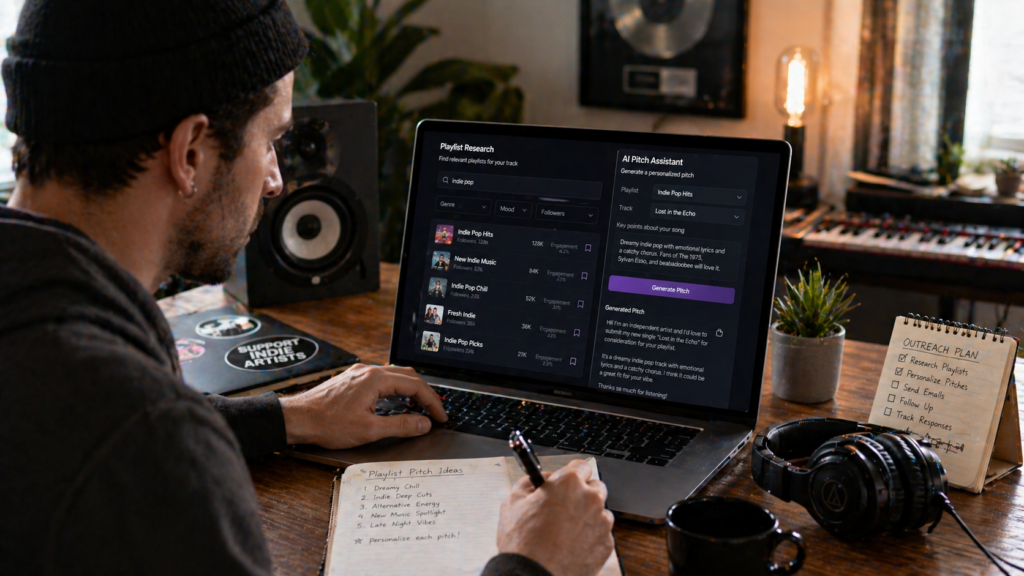
Playlist outreach is time-consuming, and many artists burn out doing it manually. AI can help you identify genre-aligned playlists, draft curator messages that sound professional, and keep track of outreach workflows.
AI can also help you tailor messaging so you don’t send the same template to everyone. Curators ignore generic messages, so personalization is essential. AI can create personalized pitch drafts based on playlist themes, but you still need to verify the curator and ensure the outreach is ethical.
Used correctly, AI helps you scale quality outreach without turning into spam.
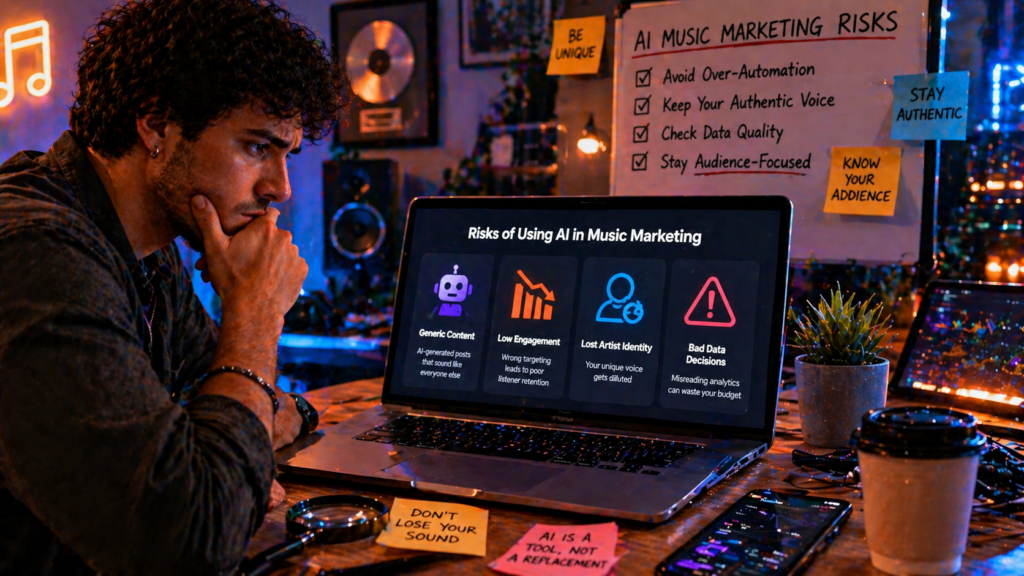
AI can hurt you when it creates low-quality content at high volume. Platforms may still distribute it, but audiences won’t connect. If your content feels generic, people won’t follow, and your community won’t grow.
AI can also make you chase trends that don’t fit your sound. Trends can bring views, but views without alignment lead to weak engagement and poor retention. That hurts long-term growth because your data becomes messy and your audience becomes confused.
The best rule is simple: AI should support strategy, not override it. Your sound, your brand, and your audience fit come first.
The most effective artists use AI to increase speed and consistency while keeping their identity human. They use it to plan releases, generate content ideas, interpret data, and improve decision-making. They don’t use it to pretend they’re someone else.
AI is powerful because it can process vast amounts of information quickly. But the value comes from your ability to direct it. The clearer your strategy, the more useful the tool becomes.
In the future, AI will be even more integrated into platforms. Artists who learn how to use it now will stay ahead because they will build systems that scale while others stay stuck in manual work.
Explicit Promo focuses on organic music promotion built around real listeners, clean engagement, and sustainable growth. AI can support parts of that process, but it never replaces the foundation: audience alignment, authentic content, and trustworthy promotion systems.
We use AI to improve planning, speed up content workflows, and extract actionable insights from performance data. That allows campaigns to stay consistent without turning into generic noise. The goal is to help artists expand their reach while protecting long-term trust across platforms like Spotify and Apple Music.
If you want AI in music promotion that actually helps—without bots, shortcuts, or fake tactics—you need a strategy that keeps the artist at the center and uses AI as a tool, not a mask.
Yes, because AI tools help independent artists plan campaigns, create content faster, and interpret data without needing a large team, as long as identity and strategy stay human.
AI can support many tasks, but it doesn’t replace strategy, creative direction, and relationship-building. It works best as an assistant that speeds execution.
AI is useful for content planning, pitch drafting, audience research, and summarizing key metrics like saves, retention, and follower growth to improve decisions.
Yes, AI can draft personalized outreach and organize workflows, but artists must still verify playlists and avoid spam tactics to protect credibility.
The biggest risk is producing high-volume generic content that weakens artist identity and reduces engagement quality, which harms long-term audience growth.
AI in music promotion is a competitive advantage when it helps you execute faster, understand listener behavior, and create more consistent campaigns. The best artists use AI-powered tools to reduce workload and improve strategy, not to replace creativity or identity.
If you stay focused on real listeners, quality engagement, and clear artistic direction, AI becomes a multiplier. It helps you show up more often, learn faster, and build momentum release after release.
Ready to grow your streams the right way? Contact Explicit Promo today and start building real momentum for your music.
