Most independent artists treat Spotify playlist curators like a one-time transaction. They send a pitch, hope for playlist inclusion, and move on—then wonder why the second email gets ignored. That approach can create short-term placements, but it rarely creates a system you can repeat for every release.
Real growth comes from relationships because curators aren’t “gatekeepers” in the abstract. They’re protecting a listening experience for their playlist followers, maintaining a consistent mood, and keeping listening habits stable so the playlist stays successful. Once you understand that, you stop pitching like you’re asking for a favor and start communicating like you’re offering value.
This guide breaks down the best ways to build relationships with Spotify playlist curators in 2026. You’ll learn how to pitch without sounding like playlist push spam, how to become an artist curators actually remember, and how to turn one placement into ongoing support across multiple playlists.
Why Curator Relationships Matter More Than Single Placements
One playlist placement can create a spike, but a relationship can create a system. When a curator trusts your taste and your professionalism, they open your messages faster, listen sooner, and consider future releases without you starting from zero every time.
This also protects your long-term Spotify growth. Repeat placements usually come from better-quality curated playlists, which means stronger listener engagement, cleaner algorithmic signals, and a higher probability of broader music discovery through Spotify’s algorithm. The goal isn’t one win—it’s repeatable wins that build momentum across releases.
A lot of placements look impressive, but don’t convert. If the playlist sends passive listeners who skip quickly, you get streams without saves, and Spotify learns mismatch instead of satisfaction. Trust-based placements convert better because the audience expects that the curator’s taste will deliver value.
A curator relationship also reduces randomness. Instead of hoping the right playlist notices you, you build an aligned ecosystem where your music is regularly considered when it fits.
Many curators run multiple playlists, manage playlist creation as a brand, and maintain a consistent “voice” across their catalog. When you become a reliable fit for their ecosystem, you’re not competing from scratch every time—you’re being evaluated as a known quantity.
That’s why relationships often lead to multiple placements, better positioning inside playlists, and repeated inclusion when you release new music. Compounding placements are how careers scale in the playlist ecosystem.

Not all playlists are the same, and relationship-building starts by knowing what you’re actually targeting. Editorial playlists are curated by Spotify’s team, algorithmic playlists like Discover Weekly and Release Radar are driven by behavior signals, and independent curators run curated playlists and user-generated playlists that you can contact directly.
Most relationship-building happens in independent playlists and curator-led brands because the curator is actively making decisions. If you don’t understand what kind of playlist you’re pitching, your outreach will feel confused. Confused outreach doesn’t build relationships—it gets ignored.
Editorial playlists are not relationship-based. You don’t build a relationship with Spotify editors through DMs, and anyone claiming direct editorial access is a red flag. Editorial is earned through Spotify for Artists pitching, timing, and positioning.
Algorithmic playlists are also not relationship-based, but they respond strongly to relationship-driven inputs. Curator placements can create the kind of listening sessions that feed algorithmic playlists, because Spotify’s system watches how listeners behave after discovery.
Independent curators are where relationship-building actually lives. That’s the zone where playlist pitching, professionalism, and trust create repeated placements over time.
Healthy playlists tend to have coherent themes, consistent update frequency, and a track selection that makes sense for a specific genre or mood. You’ll often see a stable listening experience, not chaotic genre switching that suggests the playlist exists for volume instead of the audience.
You’re also looking for signs the playlist has real listeners, not inflated numbers. If a playlist looks huge but the track mix feels random or the updates feel unnatural, treat it cautiously. Relationship-building is easier when the playlist itself is built for listeners, not for metrics.
Build a Curator-Ready Foundation
Curators do a quick scan before they commit to playlist inclusion. They look at your artist profile, cover art, release consistency, and whether your presentation feels real. If your profile looks unfinished or your branding is inconsistent, you create friction—even if the song is good.
A clean foundation doesn’t make you famous. It makes you safe to include. Safety is a powerful lever in playlist curation because curators are protecting their followers’ experience and their playlist’s visibility.
Your artist profile should communicate your music style quickly. Your bio should be current, your imagery should be consistent, and your top tracks should reflect what you want new listeners to hear first. If your profile feels scattered, curators assume the music will be scattered too.
Use your profile like a conversion page. When a curator checks your page, you want them to think “this artist is clear, consistent, and worth featuring,” not “I’m not sure what I’m looking at.”
Curators may not obsess over metadata the way distributors do, but they do care about clarity. A track that is mislabeled, confusingly titled, or inconsistent with the presented genre creates doubt. Doubt slows decisions, and slow decisions kill placements.
Release planning also matters for relationships. When you pitch in a panic, you look like you operate in chaos. When you pitch with calm timing and a clear release cadence, you look like someone worth supporting long-term.
Most artists make the biggest mistake by chasing popular playlists that don’t match their music genre or listening experience. That forces them to oversell, and overselling is what makes pitching feel desperate.
A better strategy is building a playlist map based on specific genres, moods, and listener context. Start with smaller playlists that show engaged audiences, consistent playlist creation, and clear playlist title themes that match how fans actually search and listen.
Small playlists can outperform big playlists when the audience is aligned. A smaller playlist often has tighter listening habits and higher intent, which means more saves, more personal playlist adds, and better downstream behavior for the algorithm.
When you earn placements in aligned small playlists, you build proof. Proof makes it easier to approach bigger curators later because you’re not asking them to take a blind risk—you’re showing that your track already performs in similar environments.
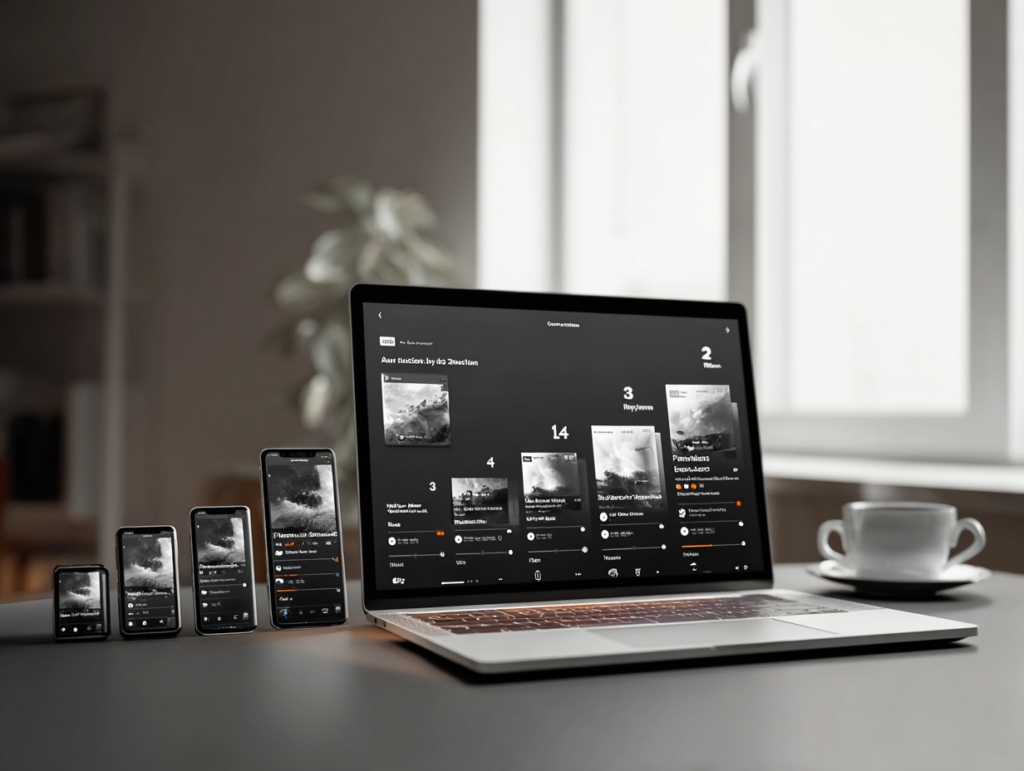
Spotify gives you signals if you pay attention. Use the search bar to find playlists in your niche, then analyze what the curator consistently includes. Look at how coherent the mood stays, whether the same artists appear repeatedly, and how often the playlist updates.
Repeat appearances often mean the curator trusts those artists or that those songs consistently perform for their audience. That pattern is useful because relationship-building is easier when you pitch into an ecosystem the curator already supports.
Treat Playlist Pitching as Relationship Marketing
Cold outreach can start the connection, but relationship marketing keeps it alive. Your goal isn’t “get added once.” Your goal is “become someone this curator wants to hear from again,” because that’s how you build a repeatable placement system.
Consistency creates familiarity, and familiarity reduces risk. If you only show up when you need something, you look transactional. If you show up with relevant releases, respectful timing, and real alignment, you look professional—and professional behavior is rare in inboxes.
Curators respond more when the ask is small. One track. One playlist. One clear reason it fits. If you send multiple tracks, multiple playlists, or a long story, you create decision fatigue.
Decision fatigue kills responses because it feels like work. Keep it simple: mention the playlist name, reference the mood or sound lane, explain fit in one sentence, and include one direct Spotify link. Clarity earns replies; complexity earns silence.
Most artists pitch too late. They drop the release and then rush to submit everywhere, which creates urgency in tone—even if they don’t mean to. Curators often update on rhythms, and your timing should respect that rhythm.
Pitch before the release date when possible, or shortly after release with calm positioning. A measured cadence signals professionalism, and professionalism is the first step toward a long-term curator relationship.
If the playlist description includes submission rules, follow them. If they prefer a form, use it. If they want email, don’t DM. If they say they don’t take submissions, don’t push.
Curators remember artists who create friction, and they remember artists who reduce it. Reducing friction is a relationship skill, not just a pitching tactic.
Following up is normal. Spamming is not. A professional follow-up is short, spaced out, and low-pressure, and it assumes the curator is busy rather than “ignoring you.”
If you follow up too often, you damage the relationship before it starts. Curators don’t respond well to pressure because pressure feels like pay-for-play behavior. Patience is part of credibility.
Create Value Beyond Your Link
Curators receive hundreds of links. They rarely receive value. The easiest way to build relationships faster is to stop being one-dimensional and start making the curator’s job easier.
Value does not mean begging or offering money. It means delivering context, fit, and clarity in a way that improves their playlist’s listening experience. When you consistently make their decisions easier, you become a preferred sender.

One direct Spotify link is enough. The rest of your message should reduce guessing: clear genre, clear mood, and one comparable reference if it’s relevant. You’re not trying to impress the curator—you’re trying to help them evaluate quickly.
This is especially important in niche playlists where the listening experience is tightly curated. If you can communicate fit fast, you respect the curator’s time and increase the odds they’ll listen.
If you have community traction that genuinely matches the playlist’s listeners, you can mention it briefly. The key is to keep it factual and relevant, not salesy. A curator doesn’t care about your ego metrics; they care about whether their audience will respond.
The best social proof is performance, but the second-best is alignment. If your audience overlaps with the curator’s taste lane, you’re a safer add.
Social media platforms like Instagram can help relationship-building when used lightly. Following a curator, watching Instagram Stories, and engaging naturally can create familiarity that makes your name feel less random in their inbox.
But don’t turn it into a campaign of comments and DMs. That feels like pressure, and pressure triggers resistance. If you want the relationship to last, keep it human and low-friction.
Curators are constantly fighting spam, pay-for-play schemes, and fake streams that harm the playlist’s visibility and credibility. If your message sounds like “guarantee,” “I’ll pay,” “playlist push,” or “I need numbers,” you instantly raise suspicion.
The safest positioning is listener-first and compliance-first. Make it clear you care about real listeners and genuine engagement. Curators trust artists who protect the listening experience because it protects the curator’s brand, too.
Turn One Placement Into a Relationship
If a curator adds your song, don’t disappear. This is where most artists waste the relationship by treating the ad as the finish line. If you want ongoing support across multiple playlists, you need continuity.
Send a brief thank-you message without overdoing it, and don’t ask for more immediately. Let the placement breathe while you focus on performance, because performance is what makes the curator comfortable adding you again.
Curators care about what happens after the ad. If your track gets skipped heavily, it harms the listening experience. If your track gets saved and replayed, it improves the playlist and strengthens the curator’s confidence in your music.
When your music consistently performs in a curator’s ecosystem, you become a reliable contributor. Reliability can lead to repeated playlist inclusion, better positioning inside the playlist, and multiple placements across the curator’s playlist network.
The goal is a small list of independent curators who consistently match your sound. Every release, you pitch that list first, track who responds, and learn which playlists convert into real listeners and follower growth.
Over time, you stop doing random outreach. You build a curated network that grows with your career, and that’s how sustainable growth happens inside the Spotify playlist ecosystem.
At Explicit Promo, playlist marketing is treated as a relationship-based system, not a numbers game. We focus on curated playlists with real listeners and long-term fit, not playlist push shortcuts that inflate streams without conversion.
We help artists identify the right playlist ecosystem for their genre, build targeted outreach that respects curators, and prioritize engagement signals that support algorithmic growth. No fake streams. No pay-for-play. No pressure tactics—just real playlist relationships that compound over time.

FAQ
Use Spotify search to find playlists in your specific genre, then open the curator profile behind each playlist. Look for submission links, emails, or social profiles tied to the playlist brand, and prioritize curators who update consistently.
Pitch only when your track fits, keep messages short and specific, follow submission rules, and maintain continuity by referencing previous support and sending relevant releases on a consistent cadence.
Only if they clearly accept submissions there. Otherwise, use the curator’s preferred channel, and treat Instagram as a light familiarity tool rather than a pressure tactic.
Avoid anyone who guarantees placement for money or promises fixed streams. Focus on curators who care about audience fit, playlist quality, and the listening experience, and who don’t treat placements as inventory.
Consistent relevance, professional communication, respect for workflow, and strong listener engagement once the track is added. Over time, performance signals build reliability, and reliability builds trust.
The best way to build relationships with Spotify playlist curators is to respect what they’re building. Curators are designing a listening experience for an audience, and they protect that audience by choosing tracks that fit.
When you consistently send relevant music, communicate professionally, respect workflow rules, and focus on real listener engagement, you become the kind of artist a curator wants to keep supporting. That’s how you move from one-off placements to ongoing playlist placements that grow your career.
Ready to grow your streams the right way? Contact Explicit Promo today and start building real momentum for your music.
