Reaching 100K monthly listeners on Spotify is a real milestone, but it’s rarely the result of one viral post or a single playlist push. Successful artists hit that level by building organic reach through consistent releases, focused content, and a feedback loop that turns attention into fans. Paid ads can help later, but the foundation is almost always organic growth that produces real listening behavior and repeat engagement.
The key difference between artists who grow and artists who stall is process. Growth isn’t just “more streams.” It’s understanding your audience, optimizing what works, and building a roadmap you can execute for months without burning out. Whether you make lo-fi, hip hop, pop, or any other style, the path is the same: build attention, convert attention, then compound it through repeat releases.
This guide breaks down a practical strategy to reach 100K monthly listeners organically, using content on Instagram and YouTube, smart release pacing, and data-driven decisions inside Spotify.
Most artists treat 100K as a validation point, but it’s really a systems outcome. Spotify rewards consistent momentum because momentum creates predictable listening patterns. When listeners return, save songs, and explore your page, the platform gains confidence and expands reach.
That’s why organic growth matters. It builds trust signals through real fans, not inflated numbers. If you focus only on quick wins, you might spike, but you won’t hold. If you build a system, you compound.
Organic reach grows faster when you stop trying to speak to everyone. Choose one audience segment and one “lane” your music fits, then commit to it long enough for the market to recognize you. This is especially important for lo-fi and mood-driven genres where playlists and listening habits are built around consistency.
Your content and captions should reflect the same identity. When people discover you through a post, they should immediately understand what you sound like and why they should stay. Clarity converts attention into follows and repeated listening.
Releases are the engine. If you disappear for months, you reset momentum and force every campaign to start from zero. A realistic roadmap is one release every 4–6 weeks, with supporting content before and after release day, so the song doesn’t die in the first week.
Each release should also connect to the last. That can mean a consistent sonic palette, cover style, or story thread. The goal is to make listeners move from one track to the next, because catalog listening is what grows monthly listeners over time.

YouTube is still one of the strongest organic discovery platforms because videos are searchable and evergreen. You don’t need a huge production budget. You need repeatable formats: performance clips, visual loops for lo-fi, lyric videos, behind-the-scenes breakdowns, or “making the song” content.
Short videos amplify this on Instagram. A consistent posting cadence builds familiarity, and familiarity is what drives people to Spotify. Use comments as data. When people ask, “What’s the song?” you’ve created real intent.
Organic growth fails when the listening path is messy. Your page, links, and pinned posts should make it easy to listen. Send people directly to Spotify and make your artist page feel active, cohesive, and worth following.
When listeners arrive, the goal is not one stream. The goal is to repeat streams. Encourage saves, playlist adds, and follows naturally through your content and storytelling. Those actions are what turn organic reach into durable results.
Spotify data is your roadmap for feedback. Watch what songs are pulling new listeners, which posts correlate with spikes, and whether monthly listeners hold after a push. If a song drives streams but doesn’t increase followers, it’s not converting. If it lifts your other songs too, it’s building fans.
This is where optimizing matters. You don’t need to change your music to chase trends. You need to identify which parts of your process are driving ROI and repeat them intentionally.
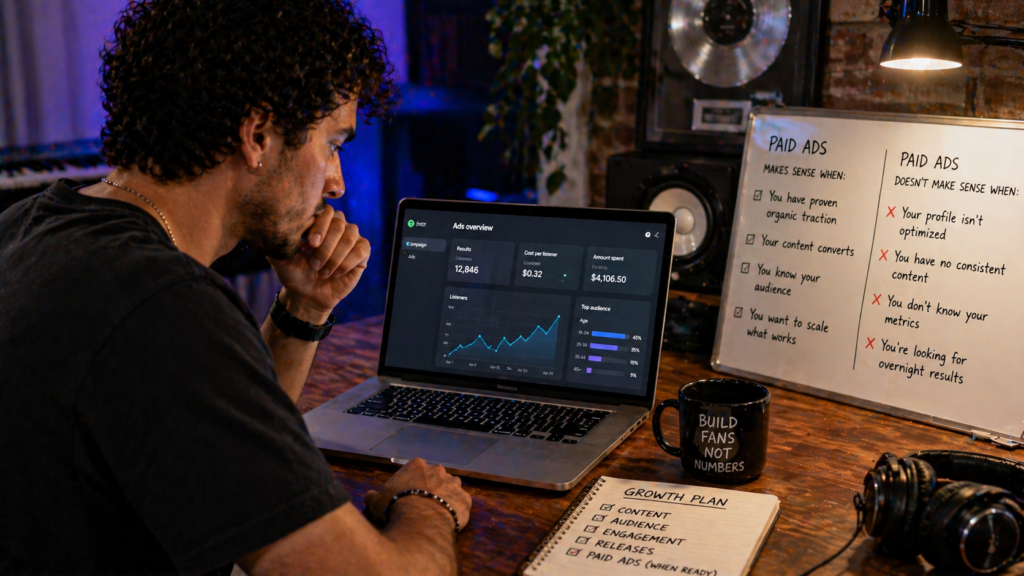
Paid ads can accelerate results, but they should amplify what already works organically. If your content isn’t converting, ads will only buy low-quality traffic. When your organic process is strong, a small budget can extend your reach to more of the right audience and increase conversion.
The goal is to spend with control, not desperation. Paid ads are a tool, not a rescue plan. Organic growth should always be the base because it keeps your data clean and your audience real.
Reaching 100K monthly listeners is possible with organic growth, but it requires a system: a clear audience focus, a consistent release roadmap, strong content on YouTube and Instagram, and ongoing optimization using Spotify data. The artists who get there don’t rely on one campaign—they build momentum that compounds month after month.
If you want growth that lasts, prioritize real listening behavior over vanity spikes. Build fans, build catalog momentum, and let the platform respond to consistent engagement.
Ready to grow your streams the right way? Contact Explicit Promo today and start building real momentum for your music.
